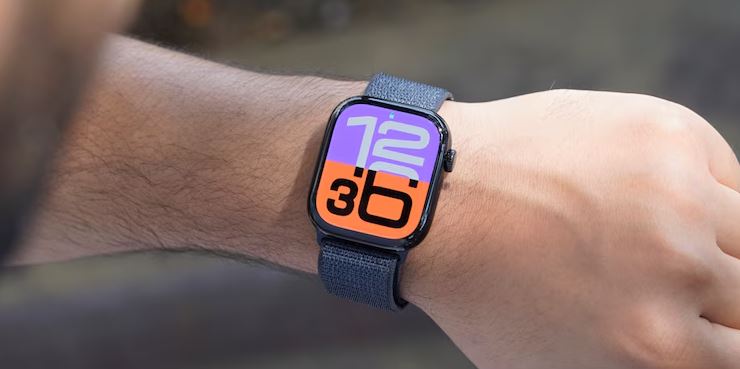
Researchers at Apple, in partnership with the University of Southern California, have made strides in creating a novel artificial intelligence model designed to monitor behavioral data via sensor signals. This study expands upon previous efforts by the Apple Heart and Movement Study and seeks to ascertain whether behavioral data, including sleep patterns and step counts, may serve as more effective indicators of health than conventional metrics like heart rate and blood oxygen levels. This blog discusses about Wearables to Predict Health Signals.
Wearables Improve Health Predictions
According to the published paper, the AI model demonstrated impressive performance, though not without certain limitations. A recent study by Apple, titled “Beyond Sensor Data: Foundation Models of Behavioral Data from Wearables Improve Health Predictions,” has been disseminated in the pre-print journal arXiv, pending peer review.
The study’s objective was to create an AI model known as the Wearable Behaviour Model (WBM), which utilizes processed behavioral data from wearable devices to enhance health predictions. This data includes metrics like sleep duration and REM cycles, daily step count and gait analysis, as well as variations in activity patterns throughout the week.
Behavioral Data- Wearables to Predict Health Signals
Hey, isn’t it fascinating how wearables have changed the way we look at health predictions? Usually, we’ve relied on things like heart rate monitoring, blood oxygen levels, and body temperature from these devices, which are definitely helpful sometimes. But just looking at these numbers can miss the bigger picture of someone’s health, and there can be some inconsistencies too. Interestingly, behavioral data that most wearables can track is yet to be seen as a dependable health indicator.
This happens for a couple of reasons. One, behavioral data is a lot more to handle than simple sensor readings and can be a bit noisy. Two, figuring out how to use this data to make accurate health predictions involves crafting some pretty intricate algorithms and systems, which is quite a tough nut to crack.
Large Language Model
A large language model (LLM) plays a crucial role in addressing complex data analysis issues. To mitigate noise in the data, researchers provided the model with structured and processed information, sourced from over 162,000 participants using Apple Watches in the AHMS study, amassing more than 2.5 billion hours of wearable data.
Summary
The AI model assessed data through 27 diverse behavioral metrics categorized into activity, cardiovascular health, sleep, and mobility, subsequently applying this analysis across 57 health-related tasks, including identifying medical conditions like diabetes and heart disease and monitoring temporary health changes. Researchers reported that, compared to baseline accuracy, the model demonstrated superior performance in 39 out of 47 evaluated outcomes.
LEAD GENERATION SERVICES APPSREAD