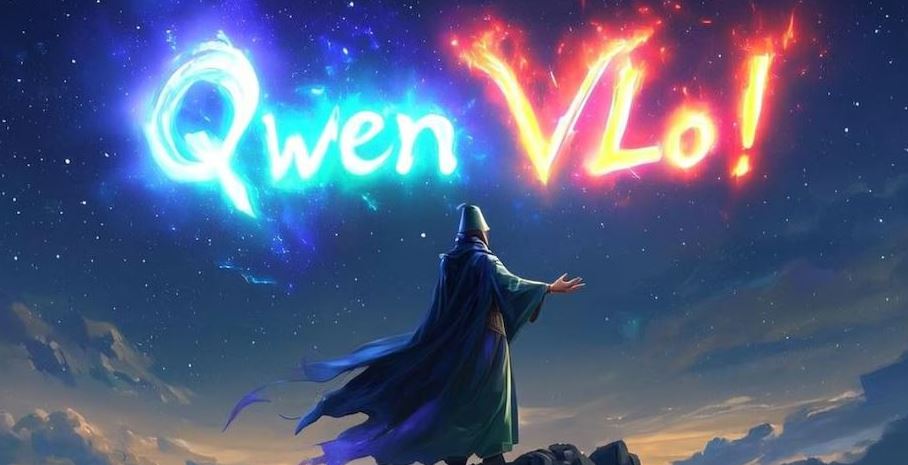
The innovative Qwen team at Alibaba unveiled an exciting new artificial intelligence (AI) model designed for image generation, aptly named Qwen VLo. This cutting-edge model serves as a successor to the previous Qwen 2.5 vision language model and boasts a range of significant upgrades that enhance its capabilities compared to its predecessors. Notably, the latest iteration supports text-to-image and image-to-image generation, allowing users to create stunning visuals from textual descriptions or modify existing images. Furthermore, Qwen VLo Image Generation accommodates text input in multiple languages, including widely spoken languages such as English and Chinese, broadening its accessibility and usability.
Launch
In an announcement shared on X, the official Qwen team account revealed the launch of this new model, which is technically designated as Qwen3-235B-A22B. Users can access the model for free through the company’s chat interface, and impressively, it can be utilized without the need for an account login, making it user-friendly and convenient.
While the quality of instruction following and the resulting image output was noted to be slightly lower than that of Imagen-3 and OpenAI’s GPT-4o-powered image generation feature, Qwen VLo Image Generation distinguished itself with faster generation times and a higher rate limit, making it a competitive option in the realm of AI image generation.
Enhanced Image Understanding Capabilities
According to information shared on the company’s GitHub page, the Qwen VLo model features enhanced image understanding capabilities, which empower it to execute inline edits with greater precision, ensuring that the structural integrity of the input images remains intact. This improvement not only elevates the overall quality of the generated outputs but also allows the model to better interpret vague and open-ended prompts, resulting in images that align more closely with user expectations.
Image Annotation Tasks
In addition to its impressive image generation and editing functionalities, the Qwen VLo is equipped to handle a variety of image annotation tasks, including edge detection, segmentation, and prediction mapping, among others. The company has also indicated that future iterations of the model will incorporate the ability to accept multiple input images, enabling users to combine them creatively based on their specific requests.
Summary
Moreover, the text rendering capabilities of this latest AI image generator have seen significant enhancements. During testing, users were able to generate accurate text across a diverse range of fonts, showcasing the model’s versatility. Lastly, the Qwen VLo supports images with dynamic aspect ratios, accommodating extreme ratios such as 4:1 and 1:3. The company has plans to introduce features that will allow users to generate images in various aspect ratios in the near future, further expanding the model’s functionality and creative potential.
LEAD GENERATION SERVICES APPSREAD